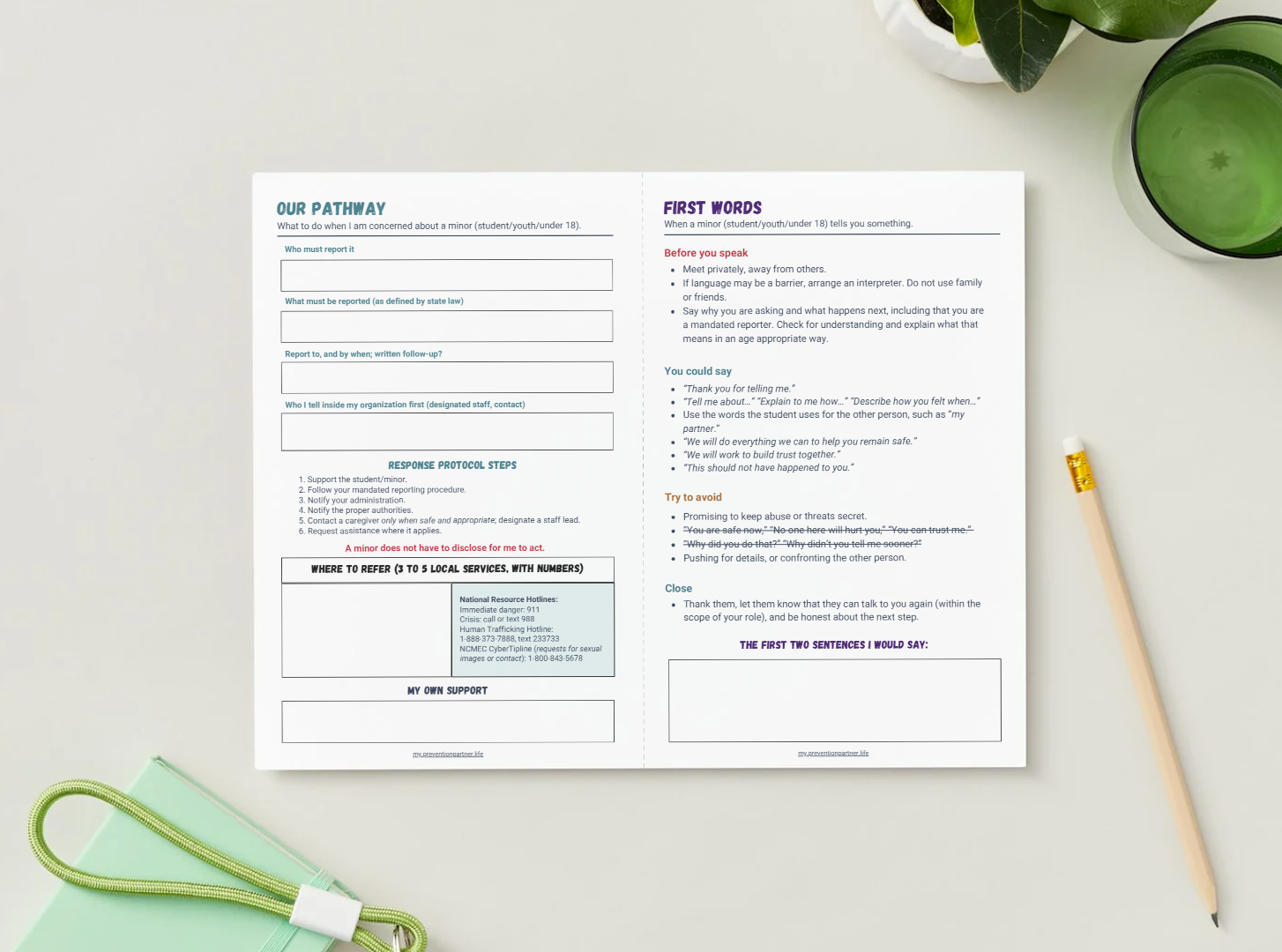
Take a few minutes to:
Know Your Next Steps
Clarify who must report, who to notify, and where concerns should go.
Find Your First Words
Prepare supportive language for moments when a child shares something difficult.
Have Support Ready
Identify the internal contacts, local referrals, and resources you may need.
The Best Time to Prepare Is Before Someone Needs Your Help.
Most of us hope we'll say the right thing if a child tells us they're being harmed. But even experienced professionals can find themselves unsure of what comes next. Who needs to be notified? What should be documented? How do we explain reporting responsibilities without making promises we can't keep? And sometimes, there's no disclosure at all. We may simply notice something concerning and need to know what action to take. This resource gives you an opportunity to think through those questions now, when you have time to review your organization's procedures, identify the right contacts, and prepare a supportive response. You don't need a perfect script. You need a clear pathway and a place to begin.
Who this resource is for?
)%20(2).png)
Use the fillable worksheet during staff onboarding, protocol reviews, or team discussions about readiness.
You don't need to complete everything at once. The important part is getting started.
Start with your reporting contacts, review the procedures that apply to your role, and identify anything you need to clarify. Then turn to First Words and consider what you'd want a child to hear from you if they shared something difficult.
What are you waiting for?